
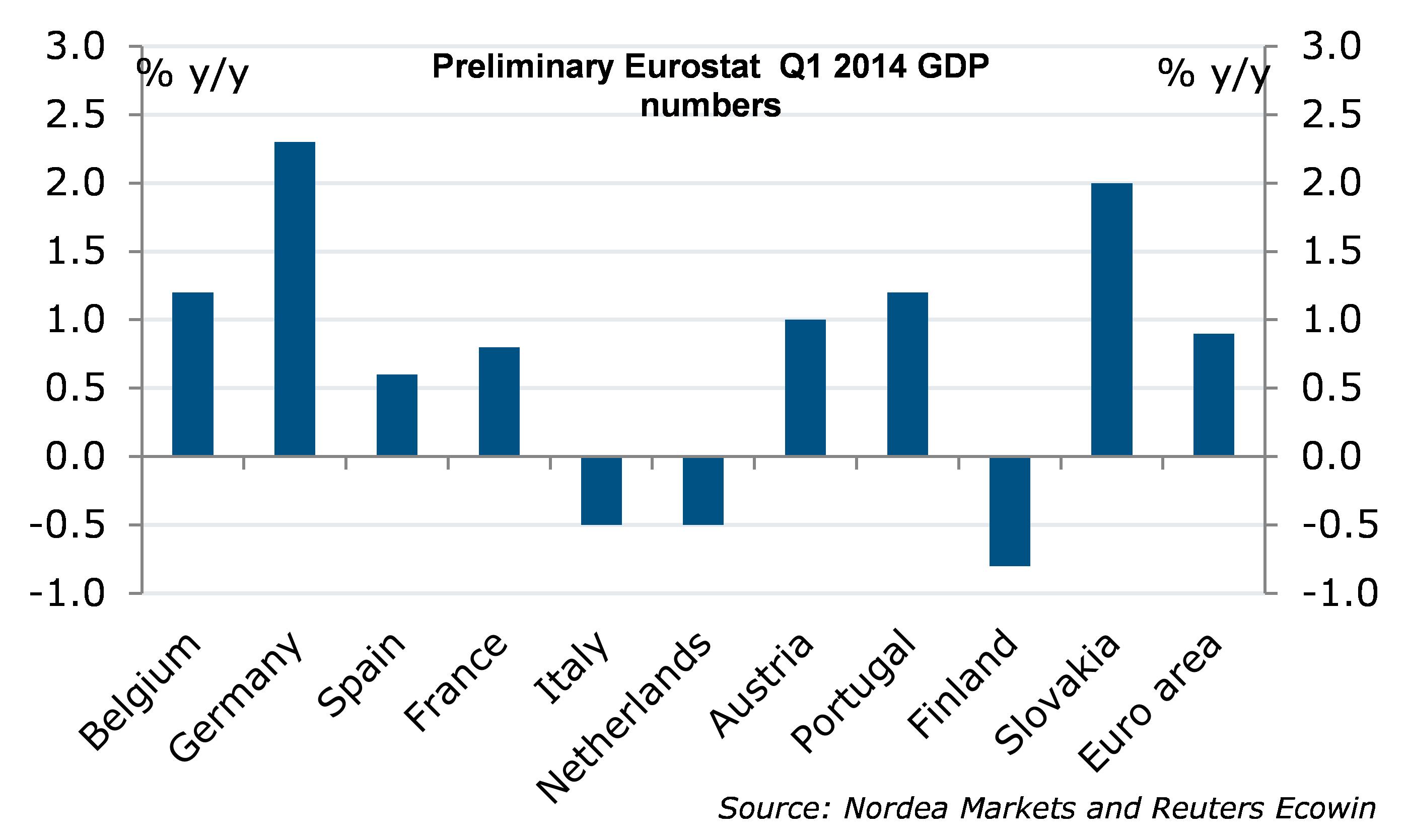
Q1 growth was driven by – surprise, surprise – Germany with a 0.8% q/q advance (up from 0.4% in the last quarter of 2013). Another ray of light was Spain with 0.4% q/q growth, though this we already knew from before. Belgium produced 0.4% q/q growth as well. The big disappointments were France with zero growth, Italy with 0.1% contraction and the Netherlands with a huge 1.4% q/q slump (though coming after a 1.0% jump in the previous quarter). The Portuguese recovery suffered a setback with 0.7% contraction, while the Finnish economy fell back to recession after 0.4% drop in GDP in Q1.
Euro-area GDP numbers are quite volatile from one quarter to another, especially on a country level, so one should not get too pessimistic based on these numbers, especially as the business surveys have been painting a more positive picture. Still, it is clear that the recovery is patchy and the outlook varies by country. Further, at this pace the economy will not get rid of its spare capacity for a long time, meaning the ECB will have to worry more about falling inflation than price pressures re-emerging. Today’s data thus underline the case for more easing from the central bank. Fortunately, Mr Draghi was clear more will be done at the June meeting, when a whole package of measures – though not QE – should see daylight.
The weak GDP data will keep bonds supported and the euro under pressure.
Big differences in the growth rates of the Euro-area economies
Nordea